301 full hard stainless steel is known for its impressive high strength and excellent corrosion resistance. Often used in applications requiring enhanced durability and rigidity, this material is particularly valued in the aerospace, automotive, and industrial sectors. To achieve these desirable properties, 301 stainless steel undergoes a series of heat treatment processes that optimise its performance. In this article, we will delve into the heat treatment processes for 301 full hard stainless steel, emphasising the role of these processes in achieving the material’s full hard state.
Understanding 301 Full Hard Stainless Steel
301 stainless steel is an austenitic stainless steel alloy known for its ability to be hardened through cold working. The “full hard” designation refers to a specific temper in which the steel has been cold-rolled to its maximum hardness. This hardness makes 301 stainless steel particularly suitable for applications where high strength and resistance to deformation are critical.
The Role of Heat Treatment
Heat treatment is a crucial step in the processing of 301 stainless steel. However, the term may be misleading when discussing full hard variants. For 301 full hard stainless steel, heat treatment typically focuses on the initial annealing and subsequent cold working processes rather than further heating.
Annealing
The first step in processing 301 stainless steel is annealing. Annealing is a heat treatment process to relieve internal stresses and improve the material’s machinability. For 301 stainless steel, annealing involves heating the material to a temperature range of 1,850°F to 2,050°F (1,010°C to 1,120°C). This high temperature allows the steel to achieve a uniform microstructure, making it easier to shape and form.
After heating, the material is rapidly cooled, often through quenching in water or air. This rapid cooling prevents the formation of undesirable phases. It preserves the steel’s austenitic structure, essential for subsequent cold working.
Cold Working
Following annealing, 301 stainless steel undergoes cold working to reach the full hard state. Cold working involves deforming the material at room temperature through rolling, drawing, or stamping. This deformation increases the steel’s hardness and strength through strain hardening or work hardening.
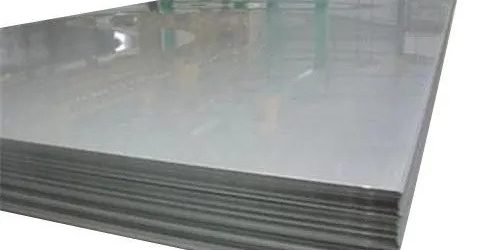
During cold working, dislocations within the steel’s crystal structure multiply and interact, significantly increasing hardness. The extent of cold working determines the final properties of the 301 grade hard plates, with more extensive deformation resulting in higher hardness.
Post-Processing
After cold working, 301 full-hard stainless steel is typically in its final form. Further heat treatment is generally not required unless the material needs to be re-annealed to relieve stresses induced by extensive cold working. However, the material’s hardness and strength are sufficient for most applications without additional heat treatment.
Applications and Benefits
Three hundred one full hard stainless steel’s heat-treated properties make it ideal for applications requiring high strength and resistance to wear and deformation. Common uses include automotive components, aerospace parts, and industrial equipment, where strength and durability are paramount.
The ability to achieve a high hardness level through cold working allows for manufacturing precision parts with excellent dimensional stability. The material’s inherent corrosion resistance also ensures long-term performance even in challenging environments.
Additional Technical & Grade-Based Data for 301 Full Hard Stainless Steel
To help engineers, buyers, and technical professionals better evaluate the 301 stainless steel grade, the following sections provide detailed insights into its chemical composition, mechanical properties, physical characteristics, and industry standards.
Understanding the 301 Stainless Steel Grade
The 301 stainless steel grade is widely used in applications requiring excellent strength, durability, and resistance to deformation. This grade is unique because it achieves extremely high strength through cold working, allowing it to reach the full hard temper. Due to its versatility, the 301 grade is commonly used in aerospace components, transportation systems, industrial tooling, and structural applications.
The ability to modify hardness by selecting different temper conditions, such as 1/4 Hard, 1/2 Hard, 3/4 Hard, Full Hard, and Extra Hard makes the 301 stainless steel grade suitable for a broad range of mechanical requirements.
Chemical Composition of 301 Stainless Steel
The chemical composition of 301-grade stainless steel contributes to its corrosion resistance and work-hardening capability.
| Element | Percentage (%) |
| Carbon (C) | 0.15 max |
| Manganese (Mn) | 2.00 max |
| Silicon (Si) | 1.00 max |
| Phosphorus (P) | 0.045 max |
| Sulfur (S) | 0.030 max |
| Chromium (Cr) | 16.0 – 18.0 |
| Nickel (Ni) | 6.0 – 8.0 |
| Nitrogen (N) | 0.10 max |
| Iron (Fe) | Balance |
This balanced chemistry ensures strong corrosion resistance and allows the metal to transform into a harder structure during cold working.
Mechanical Properties of 301 Full Hard Stainless Steel
The mechanical properties of 301 full hard stainless steel make it one of the strongest austenitic stainless steel grades available without heat hardening.
| Property | Value (Full Hard Temper) |
| Tensile Strength | 1850 – 2050 MPa (268–298 ksi) |
| Yield Strength | 1400 – 1600 MPa |
| Elongation (50mm) | 1–2% |
| Hardness | Rockwell C 48–51 |
| Modulus of Elasticity | 193 GPa (28 x 10⁶ psi) |
These high-strength values are achieved purely through cold working, as part of the 301 stainless steel heat treatment process involving annealing followed by deformation.
Physical Properties of 301 Stainless Steel
These physical properties of 301 stainless steel help engineers evaluate performance in demanding environments:
| Property | Value |
| Density | 8.03 g/cm³ |
| Melting Range | 1398–1421°C |
| Thermal Conductivity | 16.3 W/m·K (at 100°C) |
| Electrical Resistivity | 0.73 µΩ·m |
| Specific Heat | 500 J/kg·K |
| Magnetic Response | Becomes magnetic after cold work |
Cold working transforms part of the microstructure to martensite, increasing magnetism.
Standards & Specifications for 301 Stainless Steel
The 301 stainless steel grade is governed by several global standards that ensure consistency in mechanical and chemical properties:
| Standard | Designation |
| ASTM | A240, A666 |
| EN | 1.4310 |
| DIN | X10CrNi18-8 |
| UNS | S30100 |
| JIS | SUS 301 |
| Temper Grades | 1/4H, 1/2H, 3/4H, Full Hard, Extra Hard |
These standards help buyers verify quality and ensure compatibility with engineering requirements.
301 Full Hard Stainless Steel: Available Grade Variants
The 301 stainless steel grade is offered in multiple temper levels to meet different strength and formability needs:
- 301 Annealed – maximum ductility and formability
- 301 1/4 Hard – moderate strength for light structural parts
- 301 1/2 Hard – increased strength with some formability
- 301 3/4 Hard – high strength for demanding parts
- 301 Full Hard – highest strength for precision and structural applications
- 301 Extra Hard – used for springs, clips, and heavy-duty components
These variants make 301 suitable for both flexible and ultra-high-strength applications.
Comparison: 301 Full Hard vs 304 Stainless Steel
A quick comparison to help technical buyers choose the correct grade:
| Property | 301 Full Hard | 304 Stainless Steel |
| Hardening Method | Cold work | Not significantly hardenable |
| Tensile Strength | Very high | Moderate |
| Corrosion Resistance | Good | Excellent |
| Magnetic Behavior | Magnetic after cold work | Typically non-magnetic |
| Applications | Springs, clamps, structural parts | Food, chemical, and marine uses |
This comparison helps users understand where 301 full hard stainless steel is preferred over 304.
Conclusion
Heat treatment processes are crucial in preparing 301 full hard stainless steel for demanding applications. The initial annealing process ensures proper microstructure and machinability. At the same time, cold working imparts the high hardness that defines the full hard state. Understanding these processes helps select the right material for applications requiring exceptional strength and durability, making 301-grade hard plates a valuable choice for various industrial needs.