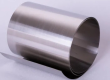
Over time, exhaust systems can have issues. Mechanical problems can build up over time from a misaligned flange, a small gap between components, or a slight difference in shaft height. Stainless Steel 409 shims keep that from happening. Located exactly between the parts, they fill dimensional gaps, evenly distribute the load and keep the alignment during long-term thermal and mechanical stress. Yet most buyers underestimate them, treating shims as commodity fillers rather than engineered components. At Panchdeep Metal, we supply SS 409 shims to automotive, industrial, and OEM clients who understand that a 0.1 mm gap, left uncorrected, costs far more to fix downstream. This blog covers what SS 409 shims actually are, what the material delivers under real operating conditions, where these shims see the most demanding use, and how to keep them performing over time.
What Are Stainless Steel 409 Shims?
Shims are thin, precision-cut pieces of material inserted between two components to correct alignment, eliminate clearance, or achieve a specific fit. Stainless Steel 409 shims add a critical material advantage to that function. They are a ferritic stainless steel construction rated for high-temperature, corrosion-prone environments.
Grade 409 is a part og the ferritic family of stainless steels. Its chromium content is between 10.5% and 11.75%, which builds a protective oxide layer on the surface. That layer resists oxidation at temperatures up to 675°C continuously and up to 815°C during intermittent exposure. The material contains titanium stabilisers, typically at six times the carbon content, to suppress intergranular corrosion after welding or thermal cycling. This makes SS 409 shims more dimensionally stable than carbon steel equivalents across repeated heat cycles.
Panchdeep Metal manufactures SS 409 shims from certified raw stock starting at 0.1 mm thickness with tolerances to ±0.01 mm on request. They are available in flat strips, slotted designs and custom-cut profiles to fit specific flange or shaft geometries.
Key Properties of Stainless Steel 409 Shims
This grade is marked by its thermal resistance. SS 409 shims maintain structural integrity at continuous service temperatures up to 675 °C. At 815 °C intermittent exposure, oxidation scaling is within acceptable limits for most exhaust and heat-treatment applications. Carbon steel shims begin scaling noticeably around 400°C. SS 409 nearly doubles that threshold.
Grade 409 exhibits different magnetic behaviour from austenitic grades such as 304 or 316. SS 409 is ferritic and responds to magnetic fields. This is important where magnetic compatibility is a design requirement, for example in sensor housings or equipment used beside MRI machines where the non-magnetic grades of austenitic stainless steels are not suitable.
Unlike austenitic grades, SS 409 work-hardens at a lower rate. This gives the material good formability during shim manufacturing, particularly for close-tolerance slotted or profiled shims. Grade 409 exhibits different magnetic behaviour from austenitic grades such as 304 or 316. SS 409 is ferritic and responds to magnetic fields. This is important where magnetic compatibility is a design requirement, for example in sensor housings or equipment used beside MRI machines where the non-magnetic grades of austenitic stainless steels are not suitable.
Corrosion resistance covers mild acids, wet exhaust gases, and atmospheric chlorides at moderate concentrations. SS 409 does not match Grade 316 in aggressive chloride environments, but for automotive exhaust, heat shields, and inland industrial equipment, it performs reliably without pitting or surface degradation over a 5 to 7 year service life under standard maintenance schedules.
Weldability is a further advantage. With the titanium stabiliser present, SS 409 shims retain their corrosion resistance post-weld without requiring post-weld annealing in most applications. This simplifies assembly for fabricators who weld shims into position.
Uses of Stainless Steel 409 Shims
Automotive exhaust systems consume the largest volume of SS 409 shims globally. Catalytic converter substrates, muffler flanges, exhaust manifold-to-head joints, and turbocharger mounting faces all require shimming to control gaps and alignment. The operating temperature of exhaust manifolds peaks between 650°C and 700°C during extended driving, precisely the range where Grade 409 maintains dimensional stability. Carbon steel shims distort at these temperatures; SS 409 holds.
Industrial furnace components rely on SS 409 shims to maintain fixture alignment through repeated thermal cycling. Heat treatment trays, furnace baskets, and burner assembly frames all expand and contract with each cycle. Shims placed at mounting points absorb that differential movement without permanent deformation.
Three other sectors use SS 409 shims extensively. These include agricultural machinery (where outdoor exposure and vibration combine), locomotive exhaust systems, and power generation equipment such as gas turbine exhaust ducts. In each case, the requirement is a shim that stays flat, holds its thickness, and resists surface degradation across years of continuous operation.
For precision shaft alignment in rotating equipment, SS 409 shims placed under bearing housings compensate for base plate irregularities. Alignment errors of even 0.05 mm at a coupling face increase vibration and reduce bearing life. Correctly sized shims eliminate that error at installation.
Maintenance Tips for Stainless Steel 409 Shims
Inspect shims during every scheduled maintenance interval, not only when a problem appears. Look for surface pitting, thinning at load contact points, or any visible warping. A shim that measures more than 0.02 mm below its nominal thickness at the contact zone should be replaced.
Clean SS 409 shims with a mild alkaline solution or isopropyl alcohol. Avoid chlorinated solvents and abrasive pads, both of which damage the passive oxide layer. Once that layer is compromised, corrosion accelerates sharply, even in Grade 409.
Store unused shims flat, away from moisture, in a low-humidity environment. Stack shims of identical thickness together and label clearly. Mixing up thicknesses during reinstallation is one of the most common causes of alignment errors in the field.
Summary
SS 409 shims deliver dependable thermal resistance up to 675°C, stable mechanical properties across repeated heat cycles, and a service life that makes them the practical choice for exhaust, furnace, and industrial alignment applications. Get in touch with Panchdeep Metal to request your required grade, dimension, and quantity.