Plant managers across India are replacing carbon steel components faster than their maintenance budgets can absorb. Rust damages tanks, fittings corrode within months in humid coastal units, and replacement cycles keep shrinking. This shift is pushing procurement teams toward stainless alternatives that last longer and cost less over their service life.
Corrosion-resistant materials now top the list of plant upgrades in oil refining, power generation and chemical processing. These sectors have used carbon steel for decades but the increased humidity, exposure to chemicals and the installation of the product outdoors have shown the limitations of carbon steel. Frequent recoating, weld repairs, and unplanned shutdowns add costs that carbon steel buyers rarely account for at purchase time.
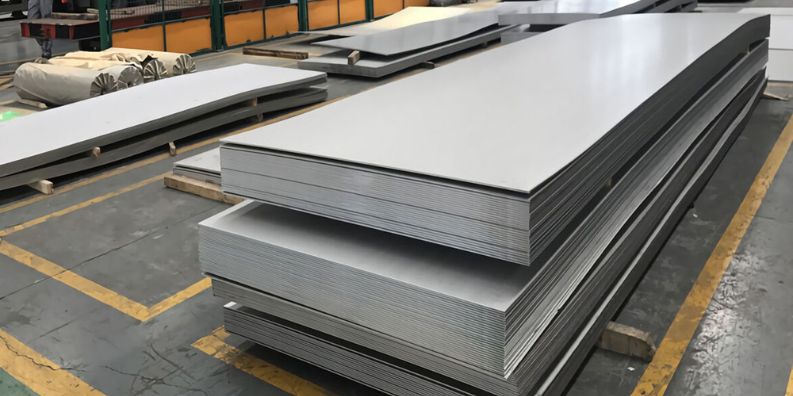
410S SS plates have stepped in as the practical alternative. Stainless Steel 410S Plates Specifications typically cover ASTM A240 and A176 standards, with thickness ranging from 1mm to 100mm, depending on the application and grade. This combination of standardised production and wide size availability has made 410S the standard grade for industries moving away from carbon steel without jumping to costlier austenitic grades.
Understanding 410S SS Plates
410S stainless steel belongs to the ferritic family, built on a low-carbon composition that keeps it stable during welding and fabrication. Unlike martensitic 410, the 410S variant resists hardening in the heat-affected zone. This single difference solves a problem that has plagued fabricators for years: cracked welds after cooling.
Heat resistance defines much of its industrial value. 410S plates hold their structural integrity at sustained temperatures up to 815°C, making them suitable for furnace linings and combustion equipment. Corrosion resistance comes next, driven by a chromium content between 11% and 13.5%, sufficient for mild industrial atmospheres and moisture exposure.
Weldability sets 410S apart from many stainless grades. Fabricators can join thick sections without extensive preheating, cutting both labour hours and rework rates. ASTM A240 covers the manufacture of plates for pressure vessels and structural applications. A176 is for stainless sheet and plate for general-purpose applications. Industries citing these standards in procurement specs see fewer compliance disputes during inspection.
Limitations of Carbon Steel in Industrial Applications
Carbon steel oxidises the moment it contacts moisture without a protective coating. Rust formation begins within weeks in coastal or high-humidity plants, and that rust spreads beneath paint layers long before visible damage appears. Maintenance teams end up scheduling inspections every 3 to 6 months just to catch early corrosion.
Lower corrosion resistance forces repeated intervention. Painting, galvanising, and cathodic protection all add recurring costs that stack up over a plant’s operating life. None of these methods stops corrosion permanently; they only slow it down until the next maintenance window.
Service life suffers as a direct result. A carbon steel tank exposed to chemical vapours may need replacement within 8 to 10 years, while comparable stainless installations run 20 years or more without structural failure. Lifecycle costs climb sharply once repair frequency, downtime, and replacement labour are factored into the total ownership figure. This is the gap that pushed engineering teams to reconsider material selection from the design stage.
Chemical Composition of SS 410S Steel
SS 410S Chemical Composition explains much of its field performance. Low carbon content keeps the alloy weldable and ductile, while chromium delivers the corrosion resistance that carbon steel cannot match. This composition profile is the reason fabricators favour 410S for components that need both strength and resistance to atmospheric attack.
| Element | Composition (%) |
| Carbon (C) | 0.08 max |
| Manganese (Mn) | 1.00 max |
| Silicon (Si) | 1.00 max |
| Chromium (Cr) | 11.50 to 13.50 |
| Phosphorus (P) | 0.040 max |
| Sulphur (S) | 0.030 max |
| Iron (Fe) | Balance |
Chromium at this concentration forms a passive oxide layer on the plate surface, which self-repairs when scratched or abraded. Carbon stays capped near 0.08% to prevent the brittleness that higher-carbon grades develop after welding. Manganese and silicon contribute to deoxidation during steel production, improving the consistency of the final plate. Phosphorus and sulphur are held to strict limits because both elements reduce toughness and weld quality when present above trace levels.
Major Reasons Industries Prefer 410S SS Plates
Better Corrosion Resistance
Chromium oxide formation protects 410S plates against moisture, mild chemical exposure, and industrial atmospheres that would pit carbon steel within a single monsoon season. Carbon steel degrades progressively under the same conditions, losing wall thickness and structural margin year after year.
High Temperature Performance
Boilers, furnaces, and exhaust systems run hot, and 410S handles continuous service up to 815°C without scaling excessively. Carbon steel components in the same zones often warp or oxidise at temperatures well below that threshold.
Improved Weldability
Fabrication shops cut rework rates because 410S accepts standard welding procedures without extensive preheat requirements. Structural assemblies go together faster, and the heat-affected zone retains enough ductility to avoid post-weld cracking.
Lower Maintenance Costs
Plants drop recurring painting and coating budgets once they switch to 410S. Fewer shutdowns for surface repair translate directly into more production hours per quarter.
Longer Service Life
Operators report 410S installations outlasting carbon steel equivalents by a decade or more in similar environments. That extended lifespan reduces total replacement frequency across a plant’s equipment inventory.
Industrial Applications of SS 410S Plates
- Oil and gas: Stainless Steel 410S Plates line storage tanks and piping sections exposed to sour gas environments.
- Petrochemical: Process equipment relies on 410S for resistance against mild acidic and caustic exposure.
- Power generation: Boiler components and turbine casings use 410S for its heat tolerance under continuous load.
- Automotive exhaust systems: Manufacturers select 410S for exhaust manifolds that must survive thermal cycling without cracking.
- Construction: Structural panels and cladding use 410S where moderate corrosion resistance meets budget constraints.
- Heat exchangers: Plate and tube assemblies depend on 410S for consistent thermal conductivity and corrosion resistance.
- Industrial fabrication: Workshops sourcing from a reliable 410S SS Plates Supplier cut lead times on custom-cut structural parts.
How to Choose the Right 410S SS Plates Supplier
When evaluating a supplier, the first thing checked is material certification. Mill test certificates should check chemical composition and mechanical properties against the particular batch delivered, not a generic data sheet. Instead of accepting the supplier’s general assertions, each order has to be verified for ASTM compliance, specifically A240 and A176.
Stock availability is important for tight project deadlines. A 410S SS Plates Supplier with ready inventory in common thicknesses avoids the 6 to 10 week lead times that custom mill orders require. Custom sizing is useful for non-standard projects. In-house cutting and machining services eliminates the need for a separate fabrication step.
Testing standards complete the assessment. Suppliers who do hardness, tensile and corrosion testing in-house can turn around quality disputes faster. That ability to deliver globally provides another layer of reliability for exporters and multi-location buyers who expect consistent batch quality from shipment to shipment.
Conclusion
Carbon steel’s recurring maintenance demands and shorter service life have pushed industries toward materials that hold up under real operating conditions. 410S SS plates answer that need with chromium-driven corrosion resistance, dependable weldability, and heat tolerance that suits boilers, exhaust systems, and process equipment alike. Lower lifecycle costs follow naturally once painting, recoating, and premature replacement drop out of the maintenance schedule.
Buyers looking for their next plant upgrade should be looking to source quality certified Stainless Steel 410S Plates from suppliers who can back up each batch with verified test certificates. Panchdeep Metal Corporation is a leading 410S Plates manufacturer and exporter with verified ASTM standards compliance for bulk industrial orders and customized sizes requirements. Please contact us to confirm stock availability and certification details before placing your next order.